Language Designer · Researcher · Open Source Contributor

Mahmoud Samir
Fayed

Programming language designer. Creator of the Ring programming language, Programming Without Coding Technology (PWCT), and Supernova. Researcher specializing in visual programming, compilers, virtual machines, algorithms, and machine learning.

Mahmoud Samir Fayed
Introduction

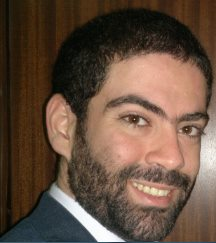
Mahmoud Samir Fayed (born December 29, 1986) is a computer programmer and researcher who began learning programming at the age of ten in 1997, under the supervision of his father. Starting with the Clipper language under MS-DOS, he went on to dedicate his career to making programming more accessible through innovative tools and languages.

In 2005, he began developing PWCT (Programming Without Coding Technology), a general-purpose visual programming language that enables application development through graphical interfaces. This was followed by Supernova in 2009 — a domain-specific language supporting both Arabic and English keywords — and the Ring programming language in 2013, a multi-paradigm language whose compiler and VM were built entirely using PWCT.

His research spans visual programming languages, compiler design, virtual machines, algorithms, and machine learning.
Position
The Creator of Ring
Education
PhD in Computer Science, King Saud University (2025)
MSc in Information Science, King Saud University (2017)
BSc in Electronic Engineering, Menoufia University (2008)
Research Areas
Visual Programming · Compilers · Virtual Machines · Algorithms · Machine Learning
A Journey Through the World of Programming
1997
Started Programming
Began learning programming at age 10 using Clipper under MS-DOS, guided by his father who works as a programmer.
2005
PWCT Development Begins
Started developing Programming Without Coding Technology — a general-purpose visual programming language enabling application development through graphical interfaces.
2006
Arabic Programming Books
Authored and published free Arabic programming books to support education and programming literacy in the Arabic-speaking world.
2008
PWCT Released as Open Source
Distributed PWCT as a free open-source project, making visual programming accessible to developers worldwide.
2009 – 2010
Supernova Language
Created the Supernova programming language — a domain-specific language for GUI applications supporting both Arabic and English keywords simultaneously. Built using PWCT.
2013 – 2016
Ring Language Development
Developed the Ring programming language using PWCT itself, generating over 24,000 lines of ANSI C code. First stable release (v1.0) on January 25, 2016.
2023 – 2025
PWCT2 — Second Generation
Released PWCT2, a self-hosting visual programming language built with Ring featuring interactive textual-to-visual code conversion. First on Steam, then open-sourced in 2025.
Open source creations

A portfolio of programming languages and tools designed to make software development more accessible and productive.

PWCT2
Programming Without Coding Technology 2.0
The second generation of PWCT — a self-hosting visual programming language built with Ring. Features interactive textual-to-visual code conversion and was released on Steam in 2023, later open-sourced in 2025.
Self-Hosting Built with Ring Import/Export Code
pwct.github.io
Ring
Ring Programming Language
A dynamically-typed, multi-paradigm language supporting imperative, OOP, declarative, functional, meta-programming, and natural language paradigms. Compiles to bytecode executed by a lightweight VM written in under 25,000 lines of ANSI C.
Multi-Paradigm Lightweight Batteries Included
ring-lang.github.io
Supernova
Supernova Language
A domain-specific programming language for GUI application development that uniquely supports writing source code using both Arabic and English keywords simultaneously. Built using PWCT and released in 2010.
Arabic/English DSL GUI Development
supernova.sf.net
PWCT
Programming Without Coding Technology
A novel general-purpose visual programming language that allows developers to build applications through graphical interfaces without writing traditional textual code. First released in 2008.
General Purpose Visual Programming Time Dimension
doublesvsoop.sf.net
Selected publications

Peer-reviewed contributions to visual programming, language design, and machine learning.

Prompt-Driven Development with Claude Code: Developing a TUI Framework for the Ring Programming Language
M. S. Fayed, A. S. Fayed · Electronics (MDPI)
2026
PWCT2: A Self-Hosting Visual Programming Language Based on Ring with Interactive Textual-to-Visual Code Conversion
M. S. Fayed, Y. A. Alohali · Applied Sciences (MDPI)
2025
Ring: A Lightweight and Versatile Cross-Platform Dynamic Programming Language Developed Using Visual Programming
M. S. Fayed, Y. A. Alohali · Electronics (MDPI)
2024
Machine Learning and Cochlear Implantation: Predicting the Post-Operative Electrode Impedances
Y. A. Alohali, M. S. Fayed, Y. Abdelsamad et al. · Electronics (MDPI)
2023
A Machine Learning Model to Predict Citation Counts of Scientific Papers in Otology Field
Y. A. Alohali, M. S. Fayed, T. Mesallam et al. · BioMed Research International
2022
PWCT: A Novel General-Purpose Visual Programming Language in Support of Pervasive Application Development
M. S. Fayed, M. Al-Qurishi, A. Alamri et al. · CCF Transactions on Pervasive Computing and Interaction
2020
PWCT: Visual Language for IoT and Cloud Computing Applications and Systems
M. S. Fayed, M. Al-Qurishi, A. Alamri, A. Al-Daraiseh · Proceedings of ICC '17 (ACM)
2017
Formal Specification and Validation of a Localized Algorithm for Segregation of Critical/Noncritical Nodes in MAHSNs
M. Alnuem, N. A. Zafar, M. Imran, S. Ullah, M. Fayed · International Journal of Distributed Sensor Networks
2014
Localized Algorithm for Segregation of Critical/Non-Critical Nodes in Mobile Ad Hoc and Sensor Networks
M. Imran, M. A. Alnuem, M. S. Fayed, A. Alamri · Procedia Computer Science
2013
Get in touch

Find me across the web.

Facebook
Personal page
LinkedIn
Professional profile